Serendip is an independent site partnering with faculty at multiple colleges and universities around the world. Happy exploring!

Levels of Organization in Biology

This activity uses the example of a flock of pelicans in flight to illustrate how analysis at multiple levels of organization enhances our understanding of a biological phenomenon.

Through an interactive whole-class discussion of PowerPoint slides, students learn about the multiple levels of organization in biology, as well as reductionism and emergent properties.

To reinforce these concepts, students answer the questions in a Student Handout and discuss their answers in additional whole class discussions.

NGSS Modeling Biology Course

This NGSS Modeling Biology Capstone Course has been developed for use in a high school science curriculum that begins with physics, followed by chemistry, and then biology. We have developed and classroom tested materials for five topics (with a total of eight instructional units). These are:
1- Introduction to Biology
2- Biological Molecules (A-Chemistry of Life; B-Enzymes)
3- DNA (A-Structure and Function; B-Transcription and Translation)
4- The Cell
5- Energy and Biological Processes (A-Cellular Respiration and Bioenergetics; B-Photosynthesis and Biosynthesis).
Subsequent topics will include inheritance, organism biology, ecology and evolution. For an overview of the course, see the first attachment below.

For additional information about this course, see https://tinyurl.com/NGSS-ModBio. If you are not already a member of AMTA (American Modeling Teachers Association) and want to join for full access to all the materials, you can go to https://modelinginstruction.org/ and click on membership. 

Using Models to Understand Cellular Respiration

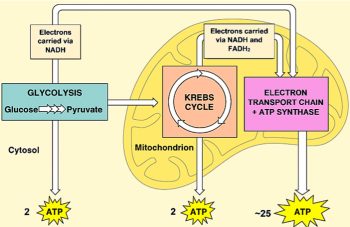
In both versions of the Student Handout, students analyze two models of cellular respiration. The first model shows chemical equations that summarize the inputs and outputs of cellular respiration. The second model is a figure that shows the three major stages of cellular respiration and the role of mitochondria.

After students analyze these models, they use what they have learned to develop their own more complete model of cellular respiration.

Then, in the advanced version of the Student Handout, students analyze how the extensive, folded inner membrane of a mitochondrion contributes to ATP production. This analysis illustrates the general principle that structure is related to function.

The simpler version of the Student Handout is available in the first two attached files and in a Google Doc. The advanced version of the Student Handout is available in the third and fourth attached files and in a Google Doc. The Teacher Notes, available in the last two attached files, provide background information and instructional suggestions and explain how this activity is aligned with the Next Generation Science Standards.

Negative Feedback, Homeostasis, and Positive Feedback

Analysis and discussion questions develop student understanding of negative and positive feedback and homeostasis.

For example, students develop a model of negative feedback regulation of body temperature; this model includes a temperature control center in the brain that uses information about differences between a setpoint and actual body temperature to regulate sweating, shivering, and changes in blood flow to the skin.

The setpoint for negative feedback can be changed; for example, in response to an infection the temperature setpoint can be increased, resulting in a fever.

Negative feedback contributes to homeostasis.

Sometimes negative feedback does not function properly; for example, diabetes results from abnormalities in negative feedback regulation of blood glucose levels.

Finally, students analyze how positive feedback contributes to rapid change (e.g., rapid formation of a platelet plug).

Food and Climate Change – How can we feed a growing world population without increasing global warming?

In this analysis and discussion activity, students learn how food production contributes to the release of three greenhouse gases – carbon dioxide (CO2), methane (CH4), and nitrous oxide (N2O).

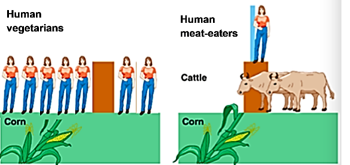
Students use biological concepts (e.g. trophic pyramids) to interpret data concerning the very different amounts of greenhouse gases released during the production of specific types of food.

Finally, students propose, research, and evaluate strategies to reduce the amount of greenhouse gases that will be released during future production of food for the world’s growing population.

The Student Handout is available in the first two attached files. The Teacher Notes, available in the last two attached files, provide instructional suggestions and background information and explain how this activity is aligned with the Next Generation Science Standards.

Why and How Your Body Makes Millions of Red Blood Cells Every Minute

In this analysis and discussion activity, students learn about stem cells, cell differentiation, and how epigenetic changes and transcription factors contribute to cell differentiation. These concepts are introduced as students analyze how the body makes red blood cells.

During this activity, students review aspects of transcription and translation, mitosis, and the functions of organelles.

Resources for Teaching and Learning about Climate Change

This annotated list includes resources that can help your students to develop a scientifically accurate understanding of the causes and consequences of global warming and climate change. This list also includes resources for learning about how to reduce greenhouse gases and how to cope with the harmful effects of climate change. When learning about climate change, it is important for students to engage with proposals to mitigate and adapt to climate change, so they can feel energized, instead of powerless. Given the nature of the topic, the approach is interdisciplinary. These resources are appropriate for middle school, high school and/or college students.

UV, Mutations, and DNA Repair

Before and after UV on double helixStudents learn about the effects of UV light, mutations and DNA repair on the survival of prokaryotes and the risk of skin cancer. In the first experiment, students evaluate the effects of different durations of UV exposure on survival and population growth of Haloferax volcanii. This experiment also tests for photorepair of DNA damage. Students design the second experiment, which evaluates the effectiveness of sunscreen. In addition, students answer analysis and discussion questions that promote their understanding of molecular biology, cancer, and the interpretation of experimental results. 

How Genes Can Cause Disease – Understanding Transcription and Translation

Transcription with RNA nucleotides

In the first section of this analysis and discussion activity, students learn that different versions of a gene give the instructions for making different versions of a clotting protein, which result in normal blood clotting or hemophilia.

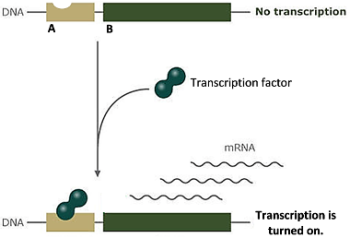
Next, students learn how genes provide the instructions for making a protein via the processes of transcription and translation. They develop an understanding of the roles of RNA polymerase, the base-pairing rules, mRNA, tRNA and ribosomes.

Finally, students use their learning about transcription and translation to understand how a change in a single nucleotide in the hemoglobin gene can result in sickle cell anemia.

Throughout this activity, students use the information in brief explanations, figures and videos to answer analysis and discussion questions.

This activity can be used to introduce students to transcription and translation or to reinforce and enhance student understanding. 

If you prefer a hands-on activity that uses simple paper models to simulate the molecular processes of transcription and translation, see “How Genes Can Cause Disease – Introduction to Transcription and Translation” (http://serendipstudio.org/sci_edu/waldron/#trans).

Food Webs, Energy Flow, Carbon Cycles, and Trophic Pyramids

Food web with plants and animals

To begin this hands-on, minds-on activity, students view a video about changes in the ecosystem that resulted when wolves were eliminated from Yellowstone National Park and decades later returned to Yellowstone. Students learn about food chains and food webs, and they construct and analyze a food web for Yellowstone. Then, students use what they have learned to understand a trophic cascade caused by the elimination of wolves from Yellowstone.

Next, students learn that the biosphere requires a continuous inflow of energy, but does not need an inflow of carbon atoms. To understand why, students apply fundamental principles of physics to photosynthesis, cellular respiration, and biosynthesis, the processes which result in carbon cycles and energy flow through the biosphere.

Finally, students use the concepts they have learned to understand trophic pyramids and phenomena such as the relative population sizes for wolves vs. elk in Yellowstone. Thus, students learn how ecological phenomena result from processes at the molecular, cellular, and organismal levels.

Syndicate content