Serendip is an independent site partnering with faculty at multiple colleges and universities around the world. Happy exploring!

What is natural selection?

This minds-on, analysis and discussion activity introduces students to the process of natural selection, including key concepts and vocabulary.

In addition, students analyze several examples to learn about the conditions that are needed for natural selection to occur.

(This activity is an expanded version of the first section of the hands-on activity Evolution by Natural Selection.)

Natural Selection and the Peppered Moth

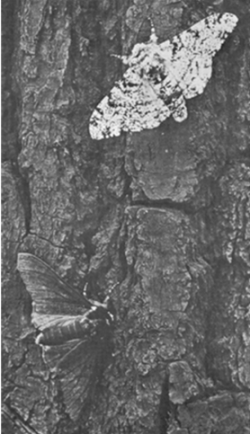
Peppered moths on tree barkIn this minds-on analysis and discussion activity, students interpret evidence concerning natural selection in the peppered moth. The evidence includes (1) the genetic basis for the different color forms of peppered moths, (2) mortality differences between the color forms in different environments, and (3) a history of correlated changes in the environment and the proportion of moths with each color form.
This activity will help students to consolidate a scientifically accurate understanding of the process of natural selection. 

(This activity is very similar to the last section of the hands-on activity Evolution by Natural Selection.)

Resources for Teaching about Coronavirus

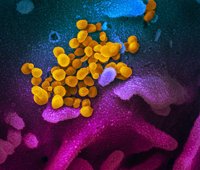
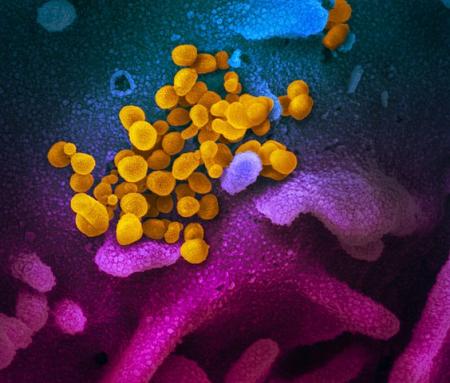
Microscopic image of SARS CoV-2Our understanding of the novel coronavirus and the COVID-19 pandemic continues to change rapidly. The following resources for teaching high school biology students are up-to-date as of November 2022. Previously provided resources are available at (Archived).

On this page:

Learning Activities

For the first three learning activities listed below, the links lead to Student Handouts (available in Word, PDF, and as a Google doc) and Teacher Notes that include instructional suggestions, background information, links to additional sources of information, and an explanation of how each activity is aligned with the Next Generation Science Standards (#NGSS).

Using Google Docs

  1. Log in to your Google account.

  2. On the Serendip page for the activity you want to use, click on the link for the Student Handout Google Doc.

  3. Click on the Make a Copy button to make a copy in your Google drive where you can edit the Student Handout.

  4. If you want to rename the file or move your copy of the Student Handout to a folder of Serendip biology activities, click on the File tab and then click on Rename or Move.

  5. You can instruct each student to make a copy of the Student Handout; they just need to click on the File tab and then click on Make a Copy. Then, each student can answer the questions in his/her individual copy.

  6. To encourage discussion, you can have pairs of students collaborate electronically to answer the questions.

Cells – How do they carry out the activities of life?

This minds-on activity begins with an analysis of the parts found in every cell and how these parts contribute to the activities of life. 

Then, students answer analysis and discussion questions as they learn about different types of cells. Students learn about (1) the differences between eukaryotic and prokaryotic cells, (2) the functions of membrane-bound organelles in eukaryotic cells, (3) the relationship between structure and function for different types of animal cells, and (4) differences between plant and animal cells.

Two versions of the Student Handout are available – a more complete version (suitable for most high school students) and a simpler version (suitable for most middle school students). 

Characteristics of Life

HummingbirdBiology is the scientific study of living things.

The Student Handout, together with two videos, help students to understand the characteristics of living things and the challenges of distinguishing between living and non-living things.

This analysis and discussion activity also introduces several themes that will be revisited in a general biology course.

Resources for Teaching about Coronavirus - June 2020

Scanning electron microscope image of SARS-CoV-2

ARCHIVED PAGE
Please see: this Teaching Resources page for current information.

Lesson Plan from NSTA
A lesson plan entitled “Coronavirus – What’s the real story” is available at http://blog.nsta.org/2020/02/05/novel-wuhan-coronavirus-whats-the-real-story/

Where do new viruses come from?

This Stated Clearly video does a good job of explaining how mutation and natural selection can start with a virus that infects a non-human animal and produce a virus that infects humans, thus resulting in a new human infectious disease. It is available at https://www.youtube.com/watch?v=NJLXdsO1GBI. 

Coronavirus
This AsapSCIENCE video does a good job of explaining how the corona virus infects your body and causes illness. It is available at https://www.youtube.com/watch?v=OTYfke545vI.

Ecology Concepts and Learning Activities

This overview summarizes major ecological concepts and recommends learning activities on topics such as food webs, energy flow through ecosystems, the carbon cycle, trophic pyramids, exponential and logistic population growth, species interactions in biological communities, succession, and effects of human activities on ecosystems. This overview also recommends introductory ecology readings. 
Suggested Sequence of Topics and Learning Activities in a High School Biology Course

Minds-On Biology

In the proposed sequence of topics and learning activities, the major biological concepts build in a logical progression that uses earlier concepts to help students understand subsequent concepts and reinforces student understanding of earlier concepts as they are used in subsequent sections of the course. For example, students are introduced to DNA structure and function early in the course and then use their understanding of DNA structure and function to enhance their understanding of subsequent topics, such as genetics and cell structure and function.

The attached documents present the proposed sequence of topics and learning activities. The learning activities will help students meet the Next Generation Science Standards (NGSS) (http://serendipstudio.org/exchange/bioactivities/NGSS/listing).

Photosynthesis, Cellular Respiration and Plant Growth

This minds-on, hands-on activity begins with the driving question of how a tiny seed grows into a giant sequoia tree.

To address this question, students first consider what types of molecules and atoms are in plants. Next, they analyze data from an experiment on changes in plant biomass in the light vs. dark. Then, they conduct an experiment to evaluate changes in CO2 concentration in the air around plants in the light vs. dark.

Students interpret these data to develop an increasingly accurate and evidence-based model of the contributions of photosynthesis and cellular respiration to changes in plant biomass.

This activity counteracts several common misconceptions about plant growth, photosynthesis, and cellular respiration. (NGSS)

Syndicate content