
Serendip is an independent site partnering with faculty at multiple colleges and universities around the world. Happy exploring!

Alcoholic Fermentation in Yeast – A Bioengineering Design Challenge

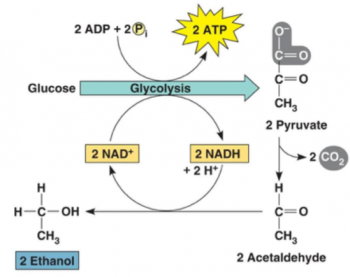
Glycolysis

This multi-part minds-on, hands-on activity helps students to understand both alcoholic fermentation and the engineering design process. Students begin by learning about alcoholic fermentation and yeast. To test whether grains of yeast can carry out alcoholic fermentation, students compare CO2 production by grains of yeast in sugar water vs. two controls.

Then, students are introduced to the bioengineering design challenge to find the optimum temperature and sucrose concentration to maximize rapid CO2 production. Students are guided through the basic engineering steps of applying the relevant scientific background to the design challenge, planning for systematic testing of possible design solutions, drawing tentative conclusions from the results of this testing, clarifying the criteria for an optimum design solution, and planning for further testing. In addition to the complete Student Handout, we offer a shorter Student Handout that omits this design challenge. 

Download Student Handout: PDF format or Word format

Get the Lead Out! Game

This board game reinforces learning about the sources and biological hazards of lead exposure. The first file has the game and the second file has teacher notes, including background information on lead.

We invite comments on this  activity, including suggestions for other teachers who are planning to use the activity, useful preparatory or follow-up activities, additional resources or any questions you have related to the activity, or a brief description of any problem you might have encountered. If you prefer to send your comments or questions in a private message, please write Ingrid Waldron at iwaldron@sas.upenn.edu.


Sexual Health and Reproduction

This is an archived page which is not being maintained. Many of the links in the Student Handout are broken.

This activity provides questions and Web sites to guide student investigation of birth control methods, fetal development, risks of alcohol and smoking during pregnancy, changes during puberty, and HIV/AIDS and other sexually transmitted diseases.  The first file has the student handout and the second file has teacher notes.

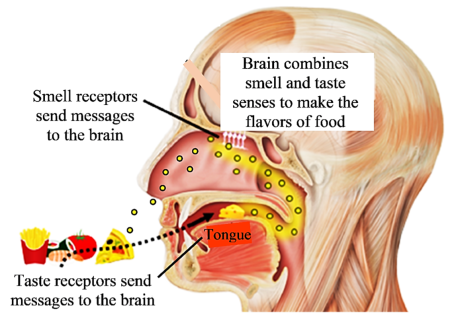
How do we sense the flavors of food?

In this minds-on, hands-on activity, students learn how flavor perception depends on sensory input from taste and smell receptors.

Students develop their science practice skills by planning and carrying out an investigation and interpreting the results.

Students also learn that sensory input is processed by the brain to stimulate perception and behavior.

Download Student Handout: PDF format or Word format

Download Teacher Preparation Notes: PDF format or Word format

The Teacher Preparation Notes recommend supplies, provide instructional suggestions and background information, and explain how this activity is aligned with the Next Generation Science Standards.

We invite your comments and questions. If you would prefer to send your comments or questions in a private message, please write Ingrid Waldron at iwaldron@upenn.edu. 

Negative Feedback, Homeostasis, and Positive Feedback, with Breathing Experiment

This minds-on, hands-on activity begins with an anchoring phenomenon, how a person’s breathing changes when he/she is re-breathing the air in a plastic bag. Students develop a negative feedback model of how the changes in breathing stabilize blood levels of O2 and CO2.

Then, students use a negative feedback model to understand temperature regulation, homeostasis, and how a change in setpoint can result in a fever.

Next, students analyze how failures of negative feedback regulation of blood glucose levels can result in diabetes.

Finally, students compare and contrast positive and negative feedback. Throughout this activity, students learn relevant human physiology.

An Appendix for the Teacher Preparation Notes suggests an optional activity in which each student group investigates a question or hypothesis concerning negative feedback, homeostasis and changes in breathing. 

Download Student Handout: PDF format or Word format

Regulation of Human Heart Rate

In the lab, Regulation of Human Heart Rate, students learn how to measure heart rate accurately. Then students design and carry out an experiment to test the effects of an activity or stimulus on heart rate, analyze and interpret the data, and present their experiments in a poster session. In this activity students learn about both cardiac physiology and scientific method.

Download Student Handout: PDF format or Word format

Invertebrate Diversity

In the lab, Invertebrate Diversity, students compare the external anatomy and locomotion of earthworms, mealworms, crickets and crayfish, all of which can be purchased at low cost from local pet stores.  Discussion questions help students understand the evolutionary basis of observed similarities and differences. This activity can be used as an introduction to the Annelid and Arthropod phyla and the principle that form matches function.

Download Student Handout: PDF format or Word format

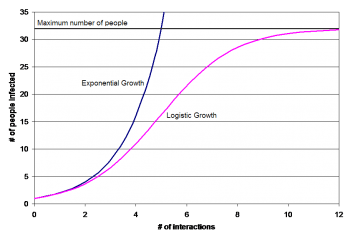
Some Similarities between the Spread of Infectious Disease and Population Growth

Graphs with exponential growth and logistic growthFirst, students analyze a hypothetical example of exponential growth in the number of infected individuals.

Then, a class simulation of the spread of an infectious disease shows a trend that approximates logistic growth.

Next, students analyze examples of exponential and logistic population growth and learn about the biological processes that result in exponential or logistic population growth.

Finally, students analyze how changes in the biotic or abiotic environment can affect population size; these examples illustrate the limitations of the exponential and logistic population growth models. 

Evolution by Natural Selection

Peppered moths on tree bark

In this minds-on, hands-on activity, students develop their understanding of natural selection by analyzing specific examples and carrying out a simulation. The questions in the first section introduce students to the basic process of natural selection, including key concepts and vocabulary.

The second section includes a simulation activity, data analysis, and questions to deepen students' understanding of natural selection, including the conditions that are required for evolution by natural selection to occur.

In the third section, students interpret evidence concerning natural selection in peppered moth populations; then students answer questions to consolidate a scientifically accurate understanding of the process of natural selection. 

We have prepared two versions of the Student Handout – a more complete version (which is suitable for most high school students) and a simpler version (which is suitable for most middle school students).

Download Student Handout: PDF format or Word format

jrlewis's picture

A Case Study of Depression

Julia Lewis
12/19/2008

Syndicate content
