
Serendip is an independent site partnering with faculty at multiple colleges and universities around the world. Happy exploring!

The How and the Why
Since I did not post this past week due to note-taking, I wanted to share that last night, I went to the McCarter Theater in Princeton, NJ to see Sarah Treem's play The How and the Why. I really enjoyed the performance--I thought the writing, acting, and the set were fantastic. The play was definitely relevant to the ideas of gender and science that we are exploring in this course, as it was basically all about what it means to be a female scientist. Rachel, the younger character, is meeting Zelda, the biological mother who gave Rachel up for adoption, for the first time.

Foundations - purely personal stories
Last Thursday we were discussing the different stories that Paul had presented in class: The Great Chain of Being, The Tree of Life, and Emergence. We thought, discussed, went back and forth on how to categorize each story. Some were timeless others did contain a sense of time, some were foundational others were not. But what stuck with me the most was this foundational issue. The problem is that we are all incredibly different individuals with different cultures, life experiences, and hopes. Therefore, every one of these stories (and many others that were not mentioned in class) could be either foundational or not foundational - it all depends on the reader. There will never be one story that is foundational to all. It is very similar

The Odds of That are.... not Odd at All
While I was reading the NYTimes article "The Odds of That," I couldn't help but feel a little disappointed. The author, Lisa Belkin, describes events that happen so coincidentally that it is impossible for someone to ignore "the signs." These signs, for example, could be the seemingly impossible chances that brothers (miles away from each other) can die on the same day, in the same way, within hours of one another (this is just one example of many). As odd and eyebrow raising as that may be, the article later discusses how it in fact, is not very odd at all.

Week Three
So, in class last Thursday we were discussing two different ways of looking at the progression (or I guess lack there of) of life, foundational and non-foundational, non-narrative and narrative, and came to the conclusion that many of us have a hybridized idea of the world based on both sides. I still can't quite wrap my head around that. It's true Darwin may have had a more hybridized idea, but I think that his text suggests that for several other reasons. First, the times. We can't forget that for Darwin to be taken seriously at all, he cannot completely discount religion, which had a very strong and historic base in society.

Catagories in Computer Science
After we talked about gender categories in class, I found myself thinking about this interesting speculation on the nature of computer programs used to store information about marriages.
why gender
Whether or not we are favorable to categories, they are so fixed and basic to our culture and every day lives that we treat them as immutable facts. And maybe the need for categories is something basic to humans as a way to make sense of the world. But the categories themselves and their implications and applications are of our own making. If this is the case, then maybe the question shouldn’t be, are categories good? But why these categories? We will never live in a gender neutral world, just like we have never and will never live in a world (biologically speaking) of binary genders. Maybe if these categories held less sway and were as fluid as the people they collect, we would come to rely less on gender as an indicator of traits and potential.

Labels, should we keep them?
Labeling and categorizing are often perceived with negative connotations. We've discussed in class and most of us agreed on keeping the labels, acknowledging that they are flawed. I believe that language plays a huge role in defining things and in helping to explain and elaborate on the meaning of these "labels." Although labeling could be seen as stereotyping and can be disadvantageous to society, without labels we cannot communicate the existence of something such as sexuality. I do believe that labels exist for a reason, and they can be good in that they make something "known" to us. The labels that we have are too few to include all the variations of sexuality because of the spectrum that we have.
Thoughts on Categories and Labels
While in our small discussion groups on Wednesday, my group and I discussed the categories of gay and straight sexualities. Like the other groups in the class, we decided that while these categories had many negative impacts on society that in a way they were still necessary. Without them, how could we build a sense of self and identity. We talked about how the categories encourage the idea of a hierarchy in which one sexuality was better than the other, or viewed as the norm, but it would difficult and perhaps impossible to get rid of them completely.

I have a friend...
...that wants to raise her children as gender-neutral. Rather than assign them gender from birth, she wants to allow them to develop on their own and make their own decisions regarding their identity.
We approached her plan with skepticism--the same level of skepticism we saw in class when the same course of action was suggested for us. Would that really make a difference?
Because it's not entirely about an individual's upbringing. It's also about the culture we live in. A child is going to be as much influenced by the society and social environment around them as they are influenced by how they are raised by their parents.
It almost seems like gender has become a dirty word.
Future of Diversity?
I was intrigued during our class discussion about how almost all of the groups decided to keep the often polarized categories about biology and sexuality even though almost everybody agreed that these categories were flawed. Despite their flaws, I dont think a utopian society where these categories will be eliminated would be a good thing. Overall, it raises the question: what is the best way to accept diversity? Do we ignore it or do we embrace and celebrate it.
Our discussion reminded me of a Newsweek article, "Is Your Baby Racist."

Remote Ready Biology Learning Activities
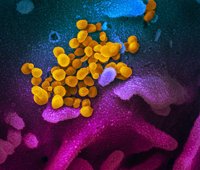
Remote Ready Biology Learning Activities has 50 remote-ready activities, which work for either your classroom or remote teaching.
What's New? Subscribe to Serendip Studio
A Random Walk
New Topics
-
11 hours 42 min ago
-
1 week 2 days ago
-
1 week 2 days ago
-
1 week 2 days ago
-
1 week 2 days ago
