
Serendip is an independent site partnering with faculty at multiple colleges and universities around the world. Happy exploring!

The Pale Blue Dot
While looking for an avatar, I came across a picture of our world taken from the Voyager 1 in 1990. This picture mainly struck me because of the story that came with it. Carl Sagan, an astronomer and astrophysicist, saw this picture and said "Look at the pale blue dot. That's here. That's home. That's us. On it everyone you love, everyone you know, everyone you ever heard of, every human being who ever was, lived out their lives.

Class Notes: February 7, 2011
"Under the Knife"
Intro: Paper guidelines and learning each other’s names activity:


Cataclysm and Evolution
In Professor Grobstein's class, we discussed whether the fact that the fossil record seems to suggest that evolutionary change occurred not slowly over an extremely long period of time but in rapid bursts invalidated Darwin's theory of evolution. In particular, we discussed the Cambrian Explosion, the as yet unexplained appearance of many diverse forms of multicellular life forms in the fossil record. While it is hard to imagine what may have provoked evolutionary cataclysms such as this, I do not personally believe that such singular events contradict Darwin's theory of evolution.

Plastic Surgery as Performance Art?...
I did a very small project a little while ago in French class on a modern performance artist.
In my Googling, I found ORLAN.
She is a French performance artist, photographer, sculpter, and--perhaps most notably--used plastic surgery as an artistic medium.
Not only does she alter her own appearance (to take on the features of women in famous paintings), but she also turns the OR into a stage, using props and costumes and other actors to make a theatric show. She also uses local anesthetics in order to stay awake during the surgery, to perform.

Unconscious Cognitive Associations
In my Cognition class we recently had to take Implicit Association Tests (IAT), which examine participants’ unconscious beliefs/attitudes by measuring their reaction time using word/image associations with categories. There are several association tests, some of which include Sexuality (measuring one’s preference toward gay people vs. straight people), Gender – Science (measuring associations between gender and preference for science vs. liberal arts), Age (young vs. old), and Race (light-skinned vs. dark-skinned).

What is Impossible?
While considering the implications of using the word 'selection' to describe the process of evolution, a rather peculiar thought struck me. As I listened to everyone trying to reason out the problems inherent in using such an active verb to describe what 'should' have been a passive, random process (and dare I say it, thought just the same myself!) I began to wonder, in some small and secret part of me, why we were all so adamant that evolution is, in fact, passive, with no drive and no set purpose. This led me back to an old question that has haunted me for years: why does it seem so difficult to reconcile science and religion? Is it impossible for creationism and evolution to coexist?
Women in the Military
Historically, women have been considered unsuitable for military combat. Some early involvements of women in the military were nurses who would attend to soldiers during combat.
Female participation in the army differs from country to country; only a few actually allow women to serve in active combat positions while others are restricted to certain positions. In the US, women have assumed male pseudonyms and concealed their gender in order to enlist and fight, as early as the Revolutionary War. Nonetheless, there is general opposition towards the idea of women fighting as equals with men.
Opposers to women in military argue both physical and psychological reasons as why women should not be allowed to fight in combat.

Is natural selection evolving as fast as we are?

It's interesting how we have the ability to think of ourselves in the world. No longer do we need to worry about our survival on a primal level. Our food is pretty much provided for, and many people have good shelter from the harsh environment. Because these needs are mostly all met, we have the time to sit and observe, to think about the past and future, to ponder the matters at hand, to stew over daily decisions, and to plumb ideas of our existence.

The Evolution of Words
Our conversation in Thursday’s class made me think not only about the evolution of stories and science, but also about the evolution of words. Professor Dalke asked our class whether or not the Great Chain of Being was foundational or not, and then asked the same about Darwin’s (or as we eventually called it, Grobstein’s tree). Because I misunderstood the way we were defining ‘foundational,’ I tried to build a claim about how Grobstein’s tree was in fact ‘foundational,’ because it was founded on scientific stories, just as the Great Chain of Being was founded on people’s faith in God.

Remote Ready Biology Learning Activities
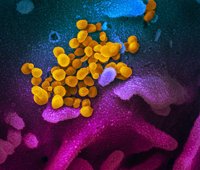
Remote Ready Biology Learning Activities has 50 remote-ready activities, which work for either your classroom or remote teaching.
What's New? Subscribe to Serendip Studio
A Random Walk
New Topics
-
10 hours 38 min ago
-
1 week 2 days ago
-
1 week 2 days ago
-
1 week 2 days ago
-
1 week 2 days ago
