
Serendip is an independent site partnering with faculty at multiple colleges and universities around the world. Happy exploring!

What, Darwin didn't know about genetics?!
While reading Darwin I keep thinking about how strange it is to read about scientists questioning where heritable traits come from. In is so ingrained in us today, even if we don't know the exact mechanisms behind it, that genetic traits are what make us look like our parents. There are the mitochondrial DNA passed down from mother to offspring and the idea of dominant and recessive traits that determine everything from eye and hair color to the likely hood that you may develop certain diseases. The inheritance of acquired traits is another important evolutionary theory of the time, developed by Lamarck in the late 1700s.

Evolutionary Education... Is Our Present Educational System Evolutionary?
After our consideration of "evolutionary education" in class today, I feel compelled to comment on how static standardization causes education to be. Beginning around second grade, kids are farmed to perform on standardized tests. Sometimes teachers' pay and school funding are intricately tied to how students score on the tests, creating tremendous classroom pressure on teachers to "teach to the test." The 2002 No Child Left Behind Act attempted to "improve" educational standards across the United States by declaring schools as educationally "fit" if their students met a certain tested benchmark.

Week 2: Thoughts
I completely understand why Darwin keeps saying he doesn't have the space to list all the pertinent examples. The ones he does list are quite enough-- I agree with whoever said that they never want to read about pigeons again, because I never want to read the words "short-beaked tumbler" ever again.

Human evolution, modernity and globalization
I guess the idea or rather questions that that have been consistently present in my thoughts after this weeks readings are about human evolution. The idea/questions derive specifically from the fifth chapter, when Darwin states that variations occur due to environmental factors. So in the age of globalization and never ending changes in modernization (technologically, medically, etc.) how is human evolution affected? Humans are constantly moving from one place to another, encountering different geographical locations and facing different technological advances; are these changes allowing for the human body to adapt? Is this constant movement allowing the human species to evolve according to the environmental factors that affect it, or is it limiting the species' ability to evolve?


Day 4 1/31/11 GIST Class Summary
Notes for DAY 4: GIST 1/31/11 Class Summary
On week when posting class notes, we don’t have to post additionally.
Also when mentioning peer comments in our posts, Include usernames.
Activity:
Revision and Education
As I am extremely interested in science education, I enjoyed our section’s discussion on education. While many of us noted our intention of gaining knowledge, none of us expressed the revision of our existing knowledge as an expectation of college. I must admit, as a premed student, I have been trained to take certain courses for the purpose of acquiring the information necessary for passing the Medical College Admissions Test. Although I did not anticipate revising my store of knowledge as I progressed through college, that does not mean that it hasn’t happened. In assessing my own education, the majority of instances where I was successfully challenged to reevaluate and modify my own understanding occurred in the discussion-based classes I have taken.

Lingering Thoughs From Week 1
In part I am still stuck on our conversations from the first week of class involving the inability of science to find the truth. In our discussion on the scientific method we were told that there is no way of finding the truth using science, but we are able to disprove things. I would have to agree that when running a chemistry experiment I feel more confident in saying that my product is not something, than confirming its identity. When I run an IR and find something uncharacteristic of my expected product I can firmly state this is not what I was expe

Remote Ready Biology Learning Activities
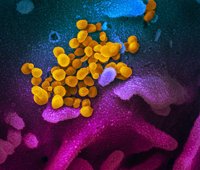
Remote Ready Biology Learning Activities has 50 remote-ready activities, which work for either your classroom or remote teaching.
What's New? Subscribe to Serendip Studio
A Random Walk
New Topics
-
11 hours 53 min ago
-
1 week 2 days ago
-
1 week 2 days ago
-
1 week 2 days ago
-
1 week 2 days ago
