
Serendip is an independent site partnering with faculty at multiple colleges and universities around the world. Happy exploring!

The imbalance in our shared space
I chose this image because the Campus Centre was my first stop at Bryn Mawr and the events of my first day within that space affected my expectations of how my experience at Bryn Mawr would unfold. In my paper, I discussed how the current admission status of international students creates a racial imbalance within our shared space. This inequality depletes the amount of cultural capital available to us as an institution and within the classroom. As a natural consequence, we experience more clumping than integration. In addition, there is a dichotomy in the makeup of faculty in comparison to the dining services and housekeeping staff. This situation traces back to what obtained in Bryn Mawr’s early years. Therefore, Bryn Mawr College is still quite classed in terms of the racial diversity of its population and the roles they perform on campus. I concluded by indicating that though we have made progress from what obtained 40 years ago, there is much room for improvement.


On Not Having A Personal Space On Campus
For my paper, I chose the above photo of the door to the McBride lounge in the basement of Radnor. I wasn't really thinking about the psychology of that choice at the time, but I wonder now if I picked it because my lack of a personal space on campus makes me feel a little shut out of campus life. My paper is centered around how not living on campus creates a natural barrier between me and some of the social aspect of campus life, but also creates a different kind of space in which the McBrides offer support and understanding of one another. Though most of us do not have a dorm room, we do have a place that is just ours, shared though it may be, and the ability to form a sort of family untit for each other. This, to me, makes us space poor and space rich at once.

My Personal Space


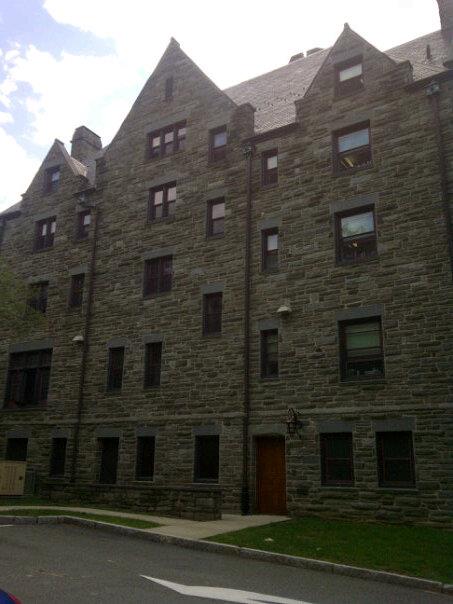
For some reason, I had a lot of difficulty writing about this particular subject. I was fascinated by Bryn Mawr's history and the story behind its architecture and students but I felt so disconnected that I didn't know how it applied to my personal space, which was my room. I ended up describing my room and the comfort I feel when I'm in it, and how I'm learning to accept it as a version of my home away from "home". I wrote about the importance of living on campus and how much better a college experience one has in comparison to a student living off-campus. When size and price of the rooms play a huge role in how one interacts with others at college, I could see how isolated a student who had to live off-campus would've felt. I feel spoiled.
I actually got around to investigating who lived in my room before my roommate and I moved in by reading the mini plaques bolted to the walls and it seems that Mildred Durand was the first ever to live in my room in 1905. And then I wondered if she brought along her house maid...

Public Sex Education in the Philippines
Proposing a Lesson Plan For Sex Education in the Philippines
- Background Information:
This project looks towards creating a lesson plan for teachers of public high schools in the Philippines. The country, a bedrock of Catholicism, has previously prevented measures to implement sex education in the country because of religious concerns. (1) The main argument behind this resistance to sex education is the idea that this type of education will lead to pre-marital sex – an act that is frowned upon within the context of the church. Thus, the sex education lesson plan that I will propose will emphasize creating a middle ground between informing the students about the subject but will also take into consideration their religious backgrounds and values. I will aim my lesson plans towards 3rd year high school students who will, presumably, have only ever looked at the reproductive system in terms of biology.

Space as Symbol
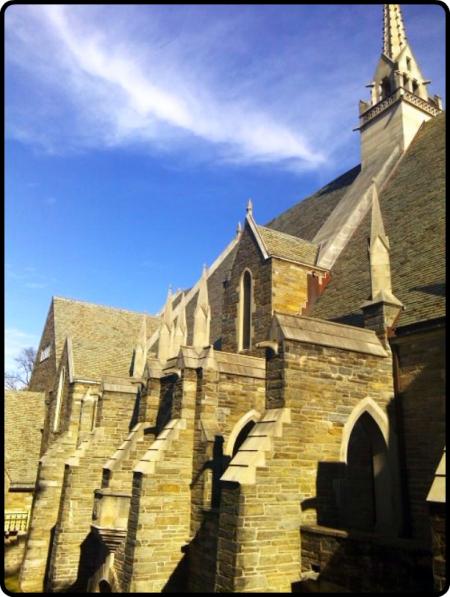
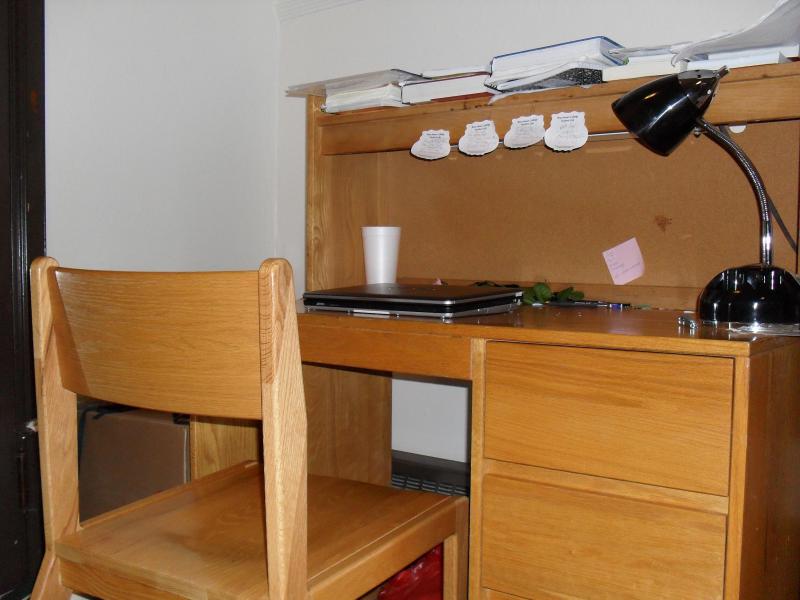
My thesis revolved around the idea of space as a symbol. Just as nbnguyen found that her desk was a reflection of herself and her personal philosophy of what an intellectual space is, I based my argument around ways that institutions reflect their values through their architecture. As time moves forward, public libraries move from being silent areas of self improvement to more collaborative areas that feature more than just spaces to study (modern libraries have computers, counseling, language classes, etc.). At Bryn Mawr, our space is a symbol of its values and aspirations of its students. I used Goodhart Hall as my example because I love its location and landscape, but the idea extends to virtually anywhere on campus. Goodhart's collegiate gothic architecture evokes a sense of upper class, power and masculinity, yet the landscape gives it a much more feminine feel. Overall, the architecture, placement, and use of Goodhart says a lot about the goals of Bryn Mawr and its students.


Outside Space at BMC
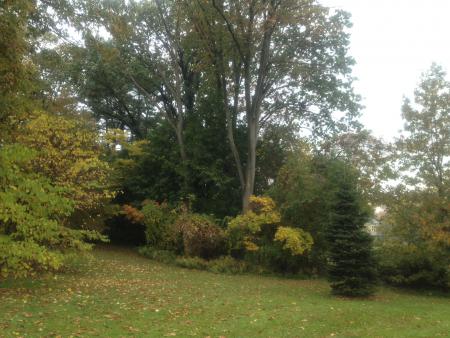
I choose this space because it was outside with no visible man-made structures around. I noticed that we focused a lot in class on the buildings at Bryn Mawr and various rooms inside, but we didn’t discuss this entire other part that makes up campus. I also have found it very interesting how outside spaces are not really used or set up for schoolwork or classes. It seems like outdoor spaces are set aside for more socializing and relaxing activities, while classes and learning take place inside. To me, this separation is reflective of society not valuing education that takes place outside of schools (i.e. street smarts). I’ve also found the learning that takes place inside a classroom is very different from the learning that takes place outside the classroom (but while still in class, like on a field trip). It’s more experiential and to me, it can be more impactful and I can learn a lot more outside of classroom spaces. I think every space has the potential to be place for learning and education. Outside spaces, to me, seem more accessible for learning than inside spaces, especially at Bryn Mawr with all of the grand, imposing buildings.


Remote Ready Biology Learning Activities

Remote Ready Biology Learning Activities has 50 remote-ready activities, which work for either your classroom or remote teaching.
What's New? Subscribe to Serendip Studio
A Random Walk
New Topics
-
1 week 23 hours ago
-
1 week 23 hours ago
-
1 week 23 hours ago
-
1 week 23 hours ago
-
1 week 3 days ago
