Serendip is an independent site partnering with faculty at multiple colleges and universities around the world. Happy exploring!

lwacker's picture

Inter-acting with Art, Nina Berman's "marine wedding"

Lee Wacker

10/1/11

PPPPP Gen/Sex

Webpaper 1

            I choose to explore my current understanding of en-abling the intra-action of gender, sexuality, and disability by looking at a series of images done by photographic artist, Nina Berman. I actually saw this photo series in New York City in 2010 at the Whitney Museum of American Art’s 2010 Whitney Biennial.

            Before I entered into the exhibit space for, marine wedding, there was a warning sign, largely printed and strategically placed for viewers to take note of. The sign foretold of graphic, violent and disturbing imagery. I ignored the sign and forged ahead into the room. There were very few people examining these images. Other rooms in The Whitney were packing with visitors for the Biennial’s hot young artists and eye-catching displays but this room was near vacant. I entered the room with my mom and found that almost immediately she decided she didn’t want to look at these images. There was something about the nature of these images that discomforted her enough to leave the room.

Serena's picture

Anxiety and Expectations

I'm feeling very anxious to visit the high school. Not only have I always been pretty socially unsure, but despite coming from an economically disadvantaged background, I've been separated from "city kids" for a long time and don't know what to expect when it comes to their behaviour, attitude, and language (eg, will they be laid-back? Use a lot of slang? Be open to our visit?). I think that a lot of this anxiety comes from our use of the term "inner-city," which has a mostly negative connotation, to describe the school. I've worked at an "inner-city" charter school before, albeit one which was kindergarten-8th graders, and what I saw there was a little disheartening.

While I consciously recognise the potential of the economically disadvantaged and those from the city, I hope that this trip can change my subconscious feelings, showing me that there is hope for more of us than I had previously imagined. Their policies seem fairly strict, so I'd imagine that the majority of the kids will be well-behaved, and I'm interested to learn about their "school selves" as opposed to their "home selves." I also think this will be an interesting place to observe how the educational system enforces "middle-class values" onto the other classes.

lijia577's picture

My expectation of High School visiting

Education, access, poverty and resources… In previous weeks, we have read so many real-life stories and analytical articles about education. Meanwhile, we have concentrated on the limitations of public education recently. It would be very interesting to visit a high school since I’ve never got a chance to know high school life in the U.S. By comparing the public school in the U.S. and in China, I think it can help me to think more deeply. Our discussion on the topic of “In class/ Out class” is limited since we are literally “in class” previously on Tuesdays and Thursday. Visiting a high school could be a nice complementary experience as a part of our seminar. I am curious about students’ attitude about going to colleges as well as how their school performance affect their anticipation about going to colleges. Meanwhile, I am curious about to what extent can Friere’s or Noguera’s thoughts are applicable towards the real-life situations. It could be a nice chance to evaluate whether “Pragmatic Optimism” would function well in high schools. Finally, it would be good to keep an open mind and treat this trip as an experience of learning and teaching.

Amophrast's picture

(In)visibility with Sex, Gender, and (Dis)ability: Correcting Images

"I think being invisible is the only superpower that doesn't have a downside."

Someone said this to me as I was working on this webpaper, trying to construct an argument about queer invisibility and and the invisibilities of disabilities. My thought process crashed to a halt--she hadn't even seen my brainstorming.

"What makes you say that?"

She told me that flight can lead to motion sickness, mind reading can be overwhelming, super strength can cause someone to break another person's bones when simply trying to give them a hug. As far as this goes, I can see how invisibility doesn't have any downfalls.

Except for the fact that you don't exist.

MVW1993's picture

Trip to High School Expectations

I think, like many other students, I am not really sure what to expect when we go to visit the high school. Though in part, I think this is because I am still not very clear on what we will be doing at the high school, I also feel that my lack of expectations relates to a comment that someone made during the silent blackboard discussion – that she wants to go into the school with an open mind and take the experience as a learning experience. I completely agree with this idea, and I too, hope to go into the school with this mentality. I know that no matter what we will be doing with the students, it will prove to be a fun, learning experience for all of us.

            As we enter the high school, however, I wonder about some of the comments that were made during our silent blackboard discussion, relating to the way in which socio-economic background might play a role in these students’ lives and schooling. I also wonder if there will truly be that sense of students feeling burned out due to the pressures of trying to succeed in school and as a bi-product of teachers feeling burned out as well. It will be interesting to me, to see if these particulars of our blackboard discussion are present in the school.

rachelr's picture

The Medical Treatment of… gayness?

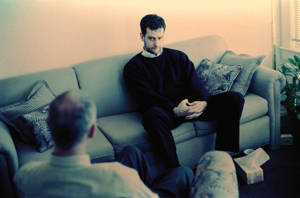
In the New York Times Magazine in June an article was published entitled “Living The Good Lie,” a narrative about therapists who help people stay in the closet. Many individuals who have homosexual urges do not want to “come out,” usually for religious, familial, or social reasons; these therapists help them with this. They argue that for people for whom faith plays an inordinately large role in their lives, it would be more damaging for them to lose their place in the community of their faith than to subdue their homosexual feelings. By acknowledging their feelings to themselves but not acting upon them, they are “cured.”


lgleysteen's picture

Nonverbal Communication as an Unclear Symbol of Gender and Identity


Most of the discourse about human communication is centered on the importance of the spoken word.  Although verbal communication tells us a lot about our society, body language can portray our true intentions. The individual body is always constrained by the social body because every action the individual does has been imprinted in their minds by culture. People are raised and socialized to interpret each other’s bodies as a series of symbols.  Almost every movement an individual does, whether it is crying, laughing, winking, smiling, or shrugging their shoulders is socially constructed.  Without following the example of other people, these movements would have no social significance.  The social significance of types of body languages in not a cultural universal and it is not portrayed and understood by all people.  One given signal cannot be interpreted the same way across cultures.  What social conditions occur when certain symbols are assumed to be universal, even though they cannot be universally expressed?

leamirella's picture

"You-Topia" And What It Means To Be At "Home".


HOW TO READ THIS PAPER.

1. Just go through the paper and read all of the points. Be sure to click on everything that you can click on, the extra nodes will pop up.

2. Check out this image of the framework of my SpicyNodes. (To prove that it follows a logical order even if you don't think so!)


3. Read this Explanation:

essietee's picture

“Y’know what they call a unicorn without a horn? A friggin’ horse.” - Disability, Sexuality, and Passing in Glee

With an average seasonal viewership of between nine and ten million, the television show Glee holds a prominent place in the American prime-time lineup. Having recently resumed its weekly broadcast on the Fox network, the television show, now in its third season, centers around the trials and tribulations of the New Directions, a glee club at the fictional McKinley High School. Composed of social outcasts of varying race, gender, sexual orientation, and disability, the group prides itself on allowing anyone who auditions to join; however, their theme of acceptance is not reflected by the school and the club, as such, faces numerous setbacks.

One of the recurring themes on Glee is that of gender/sexuality and disability. Of particular note are two characters: one is Kurt Hummel, a male student who identifies as gay, is regularly bullied and, though still facing personal doubts, has become more self-assured with the progression of the last two seasons. The other character is the newly introduced Sugar Motta, a female student who claims to have self-diagnosed Asperger’s Disorder, which she believes gives her the equivalence of diplomatic immunity and allows her to say anything she wishes. Within this paper, I’d like to specifically focus upon these two characters as they are portrayed in Season Three, Episode Two; a recap of this installment may be found here.

Syndicate content