
Serendip is an independent site partnering with faculty at multiple colleges and universities around the world. Happy exploring!


Notes 11-16-2010
Notes: 11/16/2010
Recap of Path to Paradise
-Limitations of the personal interview as a method for learning
-Individualistic view doesn’t allow interpretation of the larger implications of the work
-Tensions between individual and political
Ckosarek: web papers- images overpower the sustenance of the paper and incorporate different elements that are unrelated to the material

The Truth Compromised
Seeing as I was not sure what genre or sub-genre The Immortal Life of Henrietta fell under. I found that it is considered to be investigative journalism.

Concerns Addressed-Or Everything About Life In a Book
At the beginning of the second half of the semester I was concerned that we may not address some of the important topics that are included in the genre of nonfiction, after reading The Immortal Life of Henrietta Lacks I think we should scrap our plans for the rest of the semester and discuss the issues that this book raises. I am very interested in today's class discussion and what we will focus on. Will it be medical ethics, religion, the disparity in medical coverage for rich and poor in this country, or the role that race plays in all of the above topics? I can hardly wait for class...
Henrietta Lacks and the Question of Genre
While reading "The Immortal Life of Henrietta Lacks" I wondered if the book was a biography, a work of science journalism, or a historical work investigating structural and overt racism within the medical community. The relationship between Henrietta Lacks, the woman, and the HeLa cells, which were once part of Henrietta Lacks, serves as the emotional and scientific center of the book. The story starts with details about Henrietta Lacks, the woman. Skloot makes an explicit point to write about features of Henrietta's persona that simultaneously mark her as a relatable human subject, a woman we might know, and a specifically racialized, gendered subject in a midcentury Baltimore.
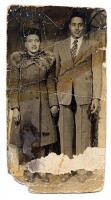
Henrietta Lacks
The Immortal Life of Henrietta Lacks is very interesting and very engaging, and like Smacholdt, I too agree that it reads like a fictional novel. Because of that, it raises many questions for me about how Skloot knows so many details that she incorporates throughout the novel. When she is explaining certain stories, she explains them so vividly that it makes me question how does she know THAT many details. Did she ADD things to make the novel more interesting. I feel that she does.
Prose as Experiment
"All writing is experimental . . . It is an attempt to solve a problem, to find a meaning, to discover its own way toward a meaning." - Donald M. Murray
In "Teach Writing as Process, Not Product," Donald Murray stresses that the ideas in a paper are just as important as execution, and that academia too often limits how an idea might be executed in prose. Having written two papers thus far for this class (and with two more to go), I thought it would be a good time to reflect on how well our class has embraced what Murray calls "experimental" in our webpapers.

Accessible Science
I am really enjoying The Immortal Like of Henrietta Lacks mainly because of the style in which it is written. I keep forgetting that I am reading nonfiction because the book reads so much like a novel. I enjoy the combination of science, narrative, and history that Skloot employs to give the reader the context behind Henrietta’s story.

Remote Ready Biology Learning Activities

Remote Ready Biology Learning Activities has 50 remote-ready activities, which work for either your classroom or remote teaching.
What's New? Subscribe to Serendip Studio
A Random Walk
New Topics
-
21 hours 38 min ago
-
1 week 2 days ago
-
1 week 2 days ago
-
1 week 2 days ago
-
1 week 2 days ago
