
Serendip is an independent site partnering with faculty at multiple colleges and universities around the world. Happy exploring!

Overbrook High School
It passed my mind to post for class today, but I am stll going to go for it.
I am posting pictures that I found when I googled Overbrook High School. I worked there for a semester, helping students in "Algebra II" classes, though they were teaching basic algebra and geometry skills. It was such an eye opening experience for me. One event I can clearly remember is when one of the students was bragging about "just getting out" and returning to school. During this one class period, he repeatedly emphasized the fact that he was locked up and that he'd been through the system. It was such a surreal moment.
To add to this, when Jody gave us the ed newspaper in class today, the graducation rate for Overbrook was incredibly low and their college admission rate even lower. How does my isolated story relate to Overbrook's really low gradution and college track rates?


Keep VS. Release
The natural environment of Harriton House was similar to that of our campus in many ways: Plants size, type, distribution...and coor and style of building. Unlike our campus, it had a plain, wide grass field for the brown-white cows and homes for sheeps and horses.
What I was interested in was the habit of bees and the progression of plants in this area. They made me think a lot more about sustainability and meaning of Life.
Bees at the Harriton House are not be caged, locked, pet--they were not kept intentionally.
What really makes them stay? Not cage, not fence, but the natural surroundings that they were attracted to. Those who prefer to stay stayed, and those who wanted to explore were released. "Staying" is not compulsory, yet most of them chose to stay.
They remind me of the squirrels on our campus--those with big, furry tail running around trees and bushes. They were a part of campus and some of them were not afraid of students at all. They collected the wallnuts and played hide and seek among the plants. They behaved in the way they are supposed to be, regardless of the disturbance around--they chose this place to be their home, and they are respected! When people are fighting for human rights this days, animals are fighting, too.


Dangling
oh, oh, I arrived and first greeted the beech tree, feeling I might end up spending more time with the tree than with the labyrinth itself. The ground under the tree covered with empty beechnut shells. Could we eat beech nuts? What do they have to do with chewing gum? Something, I'm pretty sure. Beech tree creating its own space within, doorways here and there where you don't even have to duck your head to walk in, then you are enclosed by rustling leaves. The tree's bark skin so wrinkly and wrinkles forming circles where a branch once grew, so so like breasts. So enormous. So full and heavy, resting on its roots, resting down through its roots. Bruce said today at Harriton House, that many of the trees that starting growing when this area ceased to be farmland, 80 to 100 years ago, have now begun to reach the end of their lives. How can this be true, when these beech trees are clearly much much older than that? I suppose different species have different life spans - ash live shorter? - but still sometimes it seems as if humans, even supposedly environmentaly minded ones, have some kind of death wish towards trees, they just have to find an excuse to cut them down when they reach a certain size. One worthwhile thing colleges do, around here anyway, is preserve magnificent old trees. Bigger ones than are allowed to remain anywhere else. (I'm withholding judgment on the worth-whileness of the academic endeavor!)

Drugs

Nixon, and later Reagan and Bush, ran highly successful media campaigns framing drug policy as being “tough on crime,” when hindsight provides incredibly compelling evidence that these policies are actually just “tough on people of color.”

Just wanting to get into the archive
the quote I mangled in class today. Paul Lauter's Reconstructing American Literature Project takes on the modernist catechism of literature as "discourse with no design on the world," as representing and creating without trying to change." He claims that to focus on the original use of language (as a complex, detached, aesthetic form) trains us to disassociate the "ways it is put together from what it is about, how it affects us, and how we might USE it....We attend to the shape, sinew, texture of a hand, not whether it offers us peace or a sword."

Angela Davis on abolition of slavery and prisons

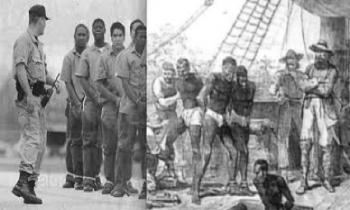 "We can do much more to combat the prison-industrial complex which is ravishing our communities if we recognize its historical connection with slavery and look at the nineteenth-century abolitionist movement as an inspiration for a late twentieth-century abolitionist movement that will work to reduce and ultimately abolish the use of imprisonment as the main means of addressing (or rather not addressing) social problems that are rooted in racism and poverty." Angela Davis, from her essay "Prison Abolition" in Black Genius: African American Solutions to African American Problems (p.203)

Remote Ready Biology Learning Activities

Remote Ready Biology Learning Activities has 50 remote-ready activities, which work for either your classroom or remote teaching.
What's New? Subscribe to Serendip Studio
A Random Walk
New Topics
-
6 days 6 hours ago
-
6 days 6 hours ago
-
6 days 6 hours ago
-
6 days 6 hours ago
-
1 week 2 days ago
