
Serendip is an independent site partnering with faculty at multiple colleges and universities around the world. Happy exploring!

Historicizing the Flipped Classroom
The latest article posted to the Tomorrow's Professor mailing list, "1330. Flipped Classrooms- Old or New?," reconnects the idea of the "flipped" classroom to long-standing educational practice.
Current media coverage paints "flipped" as a revolutionary form of blended or technology-enhanced teaching. Instead of lecturing, an instructor introduces key concepts and skills though online videos or interactive tutorials, which students are required to complete before class. The instructor then uses class time for active learning exercises designed to help students engage with and master that material -- such as problem-solving, group projects, in depth discussion, debates, etc.

From Hypothesis to Home: the insider/outsider dynamic of science and society
I have often wondered why I gravitate toward science, why this way of interpreting the world speaks to me. And yet, I have often wondered why despite being given the tools to dive right into the nucleus of science—research—I instead prefer to circumnavigate the nucleus in a quick-paced orbit like an electron, buzzing around but never quite finding home in the heart of scientific investigation.
Reading The Hungry Tide, I immediately connected with Piya’s character. A scientist, and marine biologist at that—a field I have explored many a day and night during my Sea Semester as I collected phytoplankton data aboard a rocking ship in the middle of the Pacific. New data was exciting, especially with the thrill of acquiring it in such dynamic and challenging conditions. The excitement Piya felt when seeing her first dolphin aboard Fokir’s boat resonated with me deeply—I have felt so similarly. But in this excitement lies tension too: when does science cross into the realm of self, community, and place? When does it grow from the act of forming a hypothesis to an act of building a home?


Bundt Cake Celebration
An interactive installation by Ava Blitz, Mellon Creative Resident for the 'Eco-Literacy' 360.
Enjoy and interact with the piece, but please respect it and do not remove anything from the site.
Thank you.
The very first Bundt Cake was made back in the 90's on Bryn Mawr's campus, outside of Arnecliffe Studio. Ave dug a hole in the ground, filled it with concrete- dug the piece out, carved it, and set it back into the depression- to be reclaimed by nature. This form has evolved over time. Carved and cast in various sizes and materials, it has occupied various environments, in the earth, on the earth, suspended in the air, and floating on water. Its interpretation is ambiguous-- nature made--human made--natural--unnatural?
The community of Bundt Cakes here is meant to be an interactive piece for the Bryn Mawr community to explore these questions.

Re-framing a Justice for Right Relationships
At our first 360 meeting in Camden, the 360 participants and CFET members had an interesting conversation on Eco-Literacy and Environmental & Social Justice. During this discussion, Michael from CFET made a comment that has remained with me through the course of this semester. He mentioned that he did not like the term “justice” as an organizing idea as it implies that there is always an impartial arbiter determining what is “right”. As someone who has felt involved and active in the pursuit of social justice, I had not previously thought there might be something problematic about this concept. Over the course of the semester, in and out of the 360, I have begun to question and challenge the idea of justice. What is justice? Who determines what is “just” and “right”? Must justice be achieved at the expense of something else? Does social justice perpetuate and reproduce existing social inequalities and hierarchies? What about ecological justice? Is there a way for eco-justice and social justice to co-exist or is there tension between them? Is justice inherently human centric? Is there a way to expand this concept to the wider natural world? To assist me in exploring these questions, I will draw on John Humbach’s essay “Towards a Natural Justice of Right Relationships”, J.M. Coetzee’s The Lives of Animals, and Teju Cole’s “The White Savior Industrial Complex”.

Representation in Science: Bias and Negativity
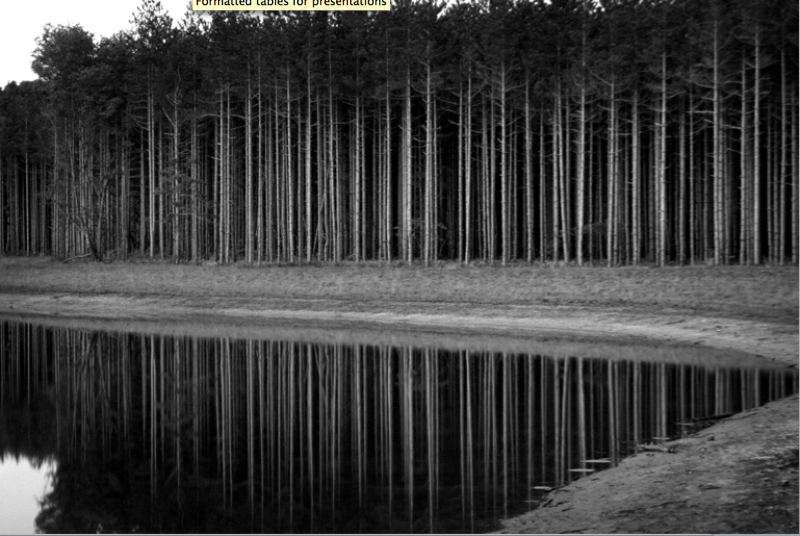
What are the similarities and differences between the following images?
(Callaway)
(Callaway)
"cannot unsee"?
since this features my and sophia's sister's "duck-rabbit,"
i can't resist sharing it w/ you all,
along w/ the question of what, since this 360, can you "not unsee"?
Things You Cannot Unsee (and What That Says About Your Brain)

Getting to know the Liney 'Ditch' Park: a lesson plan for Camden
Intro/rational:
I’ve so enjoyed working with the fifth grade class in Camden this semester, and yet I’ve found our limited connection to be very frustrating. Due to the various time and logistical constraints, as well as the fact that there are so many of us teaching together and we haven’t been working this class continuously, I have not been able to carry out my dream lesson plans. Therefore I decided to design a lesson plan for a week-long unit in their class. In this imaginary scenario, I am the teacher, and have been for the whole year. They will be coming out of a long couple of units on slavery and the civil rights movement, and my hope is that this week and the unit after it will bridge a connection between the two. (I’ll use a book called Roll of Thunder, Hear My Cry by Mildred D. Taylor.) It will likely be around the end of September, or perhaps in the end of April/beginning of May. These are times when it tends to be fairly warm and nice out but the weather is not reliable so we may end up having some interesting conversations about how ‘bad’ weather plays into our concept of nature/environment.

Understandable, Memorable, and Shareable
Regardless of socioeconomic status, ethnicity, or ecosysytem, children play in similar ways when they have safe free time in nature.
-Children and Nature Design Principles (Ch.3) Sobel
Knowledge, in my opinion, is perpetual when gained through experience. We learn not to play with fire because our bodies endure pain at first encounter. We know which foods we like best because we eat them and develop a sense of taste. We have the ability to know through our use of senses; sight, touch, smell, hearing, and taste. We can only gain true knowledge when we encounter and expose ourselves to an environment.
Instructors, guides, and even teachers can profess and stress the importance of the environment, but ultimately it means nothing if all they do is talk about it. Students will only have an idea, an imagination in their mind, never knowing the impact of the full ability of their senses. The environment will mean nothing if students never have an experience with it. As environmentalists, we can’t force the importance and value nature has for us upon others because we don’t all share the same values. We can’t assume that everyone has the same opportunities as others to experience the environment a certain way because we don’t all have the same access. We can’t teach the importance of environmental education if we can’t allow our students to dance with the universe.

Remote Ready Biology Learning Activities

Remote Ready Biology Learning Activities has 50 remote-ready activities, which work for either your classroom or remote teaching.
What's New? Subscribe to Serendip Studio
A Random Walk
New Topics
-
2 days 16 hours ago
-
2 days 16 hours ago
-
2 days 17 hours ago
-
2 days 17 hours ago
-
5 days 15 hours ago
