
Serendip is an independent site partnering with faculty at multiple colleges and universities around the world. Happy exploring!

Stud Life

About the Film
Year Released: 
2012
Running Time: 
80
Documentary/Fiction: 
Fiction
Synopsis: 

"JJ, a black lesbian stud with mad swagger, and her best friend Seb, a cute white twink, do everything together. When JJ meets a beautiful femme named Elle, Seb warns her that the seductress is trouble, to no avail: JJ is determined to have her, whether she’s seeing someone else or not. As JJ becomes more enamored with Elle and they begin a tumultuous, boundary-pushing relationship, and Seb is busy lusting after online conquests while thwarting the advances of a flamboyant drug dealer, their once solid friendship begins to waver. But Elle has something to hide that JJ can’t wrap her mind around, and Seb’s manly cyber crush isn’t all that he seems. As urban London’s homophobia affects both of their lives in different ways, JJ and Seb must lean on each other and both are forced to reevaluate their own stereotypes and beliefs on love and life."

Smith, Angelique. "Stud Life." Frameline. Accessed December 2 2012. http://ticketing.frameline.org/festival/film/detail.aspx?id=2586&FID=49.

Poster Image: 
Director
Film Director: 
Production Info
Reported or Estimated Budget: 
Raised $9,430 via IndieGogo. Totally self-financed, “micro, nano, like microscopic budget”
Location: 
London, England
Other Interesting Production Info: 
Microbudget feature length film—raised money via IndieGogo; shot in 10 days; 13 days of production; two weeks of rehearsal, which included T’Nia living as a stud; two week casting process.
Categories About the Film
Genre: 
comedy
drama
romance
Keywords: 
art and culture
glbtq
interracial relations
sexuality
urban life
Racial/Ethnic Affiliation: 
African
British
Caribbean
European
Filmmaking Team
Writer's Name: 
Campbell X
Producer: 
Stella Nwimo, Nadya Kassam, Lulu Belliveau
Primary Cast: 
T'Nia Miller, Kyle Treslove, Robyn Kerr, Simon Savory
Exhibition/Distribution Info
Distributor: 
Wolfe Releasing
Where to find it/How to get it: 
Direct from Distributor
Festivals/Awards: 
  • World premiere at the BFI London Lesbian and Gay Film Festival, 2012
  • Los Angeles Gay and Lesbian Film Festival (Outfest) 2012
  • San Francisco International LGBT Film Festival 2012
Analysis
Personal Film Review and Cultural Context: 

Stud Life takes place in London and follows JJ, a black stud, their white gay friend Seb, and Elle, a black femme and JJ’s love interest. The collision of vastly different sexualities in the film challenges the perception that there is only one way to be a lesbian. JJ embraces this difference: “It takes all sorts to make a lesbian nation.” JJ’s photography captures resistance toward the conventions of sexuality and relationships—one photoshoot stages a civil partnership so a man can avoid deportation. With Campbell’s great direction, the film tastefully and respectfully explores relationships with non-traditional components while presenting the characters as their multi-faceted, complex selves. The sex scenes reveal insightful truths about the characters and how they connect to others aided by the actors’ genuine performances. Elle’s character complicates the representation of femme identity, raising questions about the intersections of race, power, and capitalism.

- Maria Aghazarian

Gun Hill Road

About the Film
Year Released: 
2011
Running Time: 
88
Documentary/Fiction: 
Fiction
Synopsis: 

After three years in prison, macho Enrique (Esai Morales) returns home to the Bronx and finds things changed. His wife, Angela (Judy Reyes), is distant, and his teenage son, Michael, has come out as Vanessa, a transgender woman. Unable to accept his child for who she is now, Enrique clings to his masculine ideals while Angela attempts to hold the family together by fiercely protecting Vanessa. Still under the watchful eye of his parole officer, Enrique must become the father he needs to be or, once again, risk losing his family and freedom.

The heart of Gun Hill Road lies in two places: a father’s inability to escape the vicious cycle of his life, and the richly drawn character of Michael/Vanessa (newcomer Harmony Santana is unforgettable). Writer/director Rashaad Ernesto Green’s first feature film is a complex family drama, told with gentle humor, sensitivity, and a deep understanding of the environment that defines its inhabitants.

-Kim Yutani

"Gun Hill Road." Sundance Film Festival. Accessed November 3 2012. http://sundance.bside.com/2011/films/gunhillroad_sundance2011.

Poster Image: 
Director
Film Director: 
Production Info
Reported or Estimated Budget: 
$119567
Location: 
Bronx, NY
Other Interesting Production Info: 
Started out as his thesis film at NYU.
Categories About the Film
Genre: 
coming of age
drama
family
Keywords: 
domestic violence
family
glbtq
incarceration
sexual abuse
sexuality
urban life
Racial/Ethnic Affiliation: 
Latin American
Latino/a
North American
Filmmaking Team
Writer's Name: 
Rashaad Ernesto Green
Producer: 
Ron Simos, Michelle-Anne M. Small
Cinematographer: 
Daniel Patterson
Primary Cast: 
Esai Morales, Judy Reyes, Harmony Santana
Exhibition/Distribution Info
Distributor: 
Motion Film Group
Box Office Earnings: 
$148994
Where to find it/How to get it: 
Direct from Distributor
Festivals/Awards: 
    • World premiere at Sundance Film Festival 2011, Grand Jury Nominee
    • Best Acting Ensemble at Ashland Independent Film Festival 2011 (Oregon)
    • Opened Outfest in Los Angeles 2011
    • Opening night of Frameline in San Francisco 2011
    • Closed Newfest in New York 2011
    • Lighthouse Beach Film Festival in NJ 2011
    • Los Angeles Latino Film Festival 2011
    • Munich International Film Festival in Germany 2011
    • International Film Festival in Seattle 2011
Anne Dalke's picture

Notes Towards Day 26 (Tues, Dec. 11): Working on our Presentations

Today we will continue the work we begin in Jody's class: planning for
the presentations we'll be doing for the whole college community:

Erin's picture

Final debrief of the Canery

As we are approaching the end of semester, we stand at the cross rod to really think back and evaluate what we have done this semester.

Last Thursday, when were discuss a text about participatory action research by Lois Weis and Michelle Fine in Working Method, we touched based upon many critical questions about the effects and purpose of our art workshop in prison.  I want to expand more on that topic as well as our last workshop.

Firstly, one valued was emphasized was to be able to challenge the traditional power relationship. Such a statement was very easy to say but hard to execute. In our case, two groups of women were brought together and doing the same art project corporately. Various background and social status were mixed in the room and conflicts were expected. I don’t know which group benefits more from such a gathering. However, we can’t that each one us were able to see a different side of the concept were talking about form others, For me, even their positions in this society were inmates. I was able to, for the first time, to have “real-life” interpretation of what dies justice system do to individuals’ lives.

Erin's picture

Make-up of the post from November 29th

I am really trying to make up the two posts I missed for Barb’s class

I think want to reflect more on the last last Friday’s discussion about looking-glass identity transformation inside the prison. The reading was very comprehensive and easy to read however the indications behind all text are very provoking and indeed caused many disagreement and tensions.  

Two important things were mentioned throughout the text which I think are really relevant to our conversation: labeling and rehabilitation.

Erin's picture

Memo #2 image

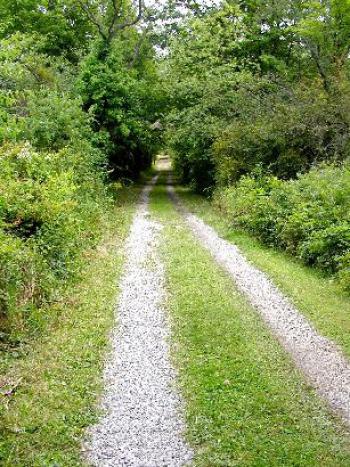
This memo, I was trying to emplore the similarities and differneces between our Canery visits and Visiona dn Alliance in Offending women. I found when comparing either two of these three, many interesting anf similarities appear. However, the length of the porgrma made the final differnece. I am not sure whihc road( the porgram) will take womne furhter.
Erin's picture

Memo #1 image

In the first week's memo, I talked about viewing the issues of disadvantagous class with differnet lences. Through the socialeconomic lence or historical lences, we will be able to see the differnece elements that might not be as obvious as it should be in other lences. Also, it's important ot consider question from various perspectives.

sara.gladwin's picture

On Silence and Resistance- reflections on Linda-Susan Beard

As beautiful as the idea of being comfortable with silence is, wrapping my head around actually performing silent activities is a different story. I was impressed by how fulfilling silence is for Linda-Susan Beard, and I thought a lot about my own restorative practices. For me, talking has always been restorative. Not shallow or surface conversation, but the kind of talking where two people come together form a different kind of understanding. For me, thinking has always been a vocal and collaborative process rather than a silent and internalized one. I was told once that there have been studies done on cats where a cat was placed in a room with no stimuli and they were essentially brain dead- no activity went on when there was nothing stimulating a response. I can’t remember who told me this or even if it’s true, but when I’m alone, I feel like those cats. I feel muted, stunted- that without the benefit of another person to think with me, I’m unable to think fully. After hearing Linda-Susan Beard talk about how fulfilling silence was for her, I wondered if we were both talking about the same kind of restoration, even if we achieved it in different ways. She spoke of feeding off of silence in a way that seemed very similar to how I feed off of conversation; it is sustaining.

Syndicate content
